Work begins on Greece’s National Cancer Plan
The Greek government, scientific community and patients join forces to develop a comprehensive national cancer strategy
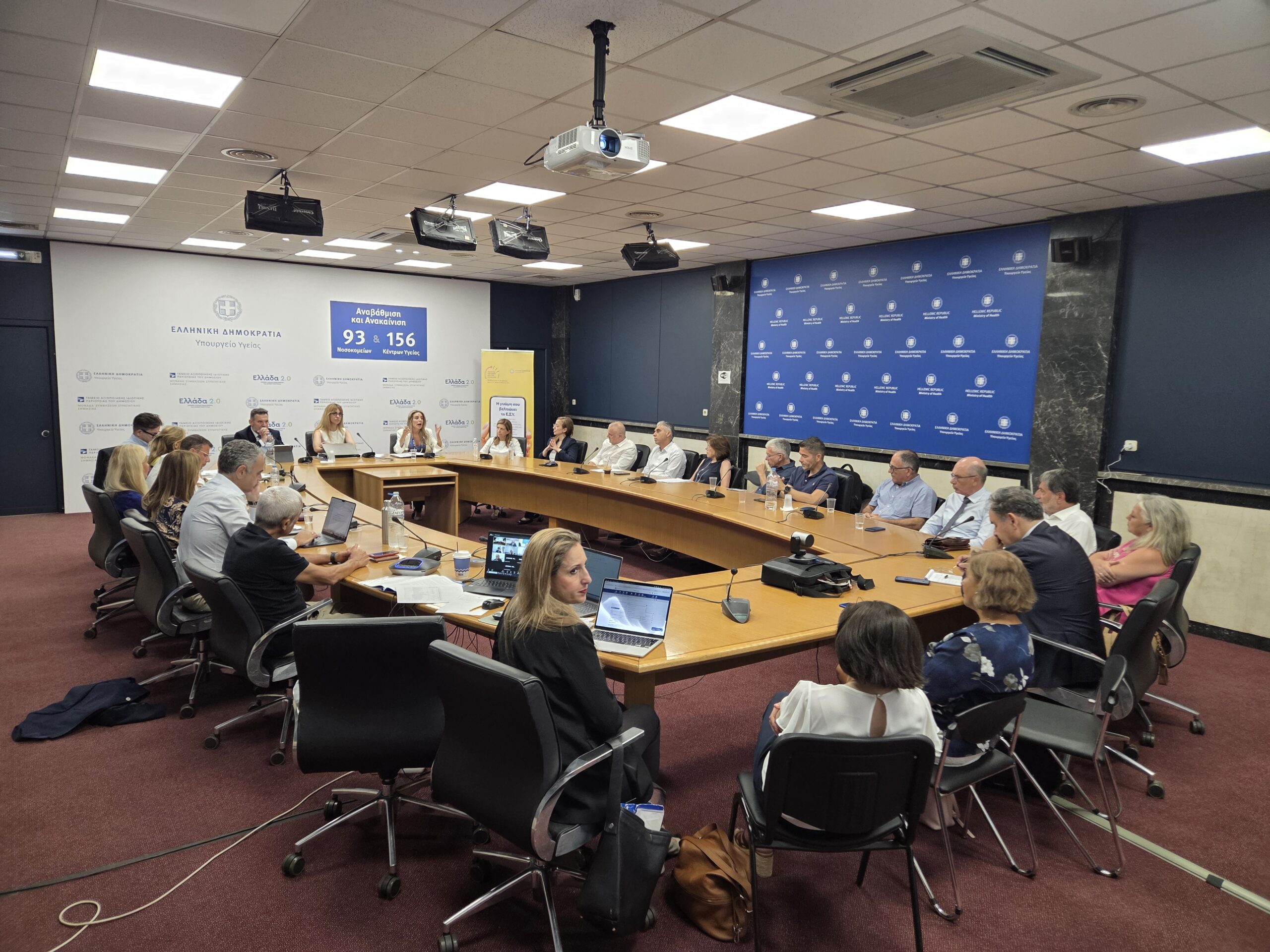
The process of developing Greece’s new National Cancer Action Plan (NCAP) began on Monday, 31 August 2026, with the first meeting of the Working Group established by the Hellenic Ministry of Health.
The aim is to develop a modern and implementable National Cancer Action Plan that brings together, within a common strategic framework, the important interventions already implemented or currently under way in Greece, while setting out the country’s priorities for cancer policy in the years ahead.
The new NCAP is intended to address the entire journey of citizens and patients, from prevention and early detection through diagnosis and treatment, rehabilitation, survivorship and palliative care. It will also incorporate the new opportunities arising from data, research, digital technology and innovation.
Particular importance is being placed on the inclusive nature of the process. The Working Group brings together representatives of the State, the medical, scientific, academic and research communities, as well as patients themselves. The development of the Plan will also draw on the knowledge and experience of a wider group of stakeholders and experts.
The shared objective is for the new National Cancer Action Plan not simply to document actions already under way, but to serve as a genuine roadmap, with clear priorities, specific and measurable objectives, timelines and mechanisms for monitoring and evaluation.
Christina-Maria Kravvari, Secretary General for Public Health, Ministry of Health and Coordinator of the Working Group
“The first meeting of the Working Group marks the beginning of the development of the new National Cancer Action Plan, at a time when Greece has already made significant progress and has more tools available for prevention, early detection and treatment of the disease.
It is a particular honour to coordinate this important national effort, together with the Deputy Coordinator and President of the Hellenic Cancer Federation (ELLOK), George Kapetanakis. Our aim is to build on the momentum already created and clearly define the country’s priorities for the years ahead, based on the real needs of the population and current scientific evidence.
Prevention and organised screening are central to the new planning process. The national screening programmes for breast, cervical and colorectal cancer have already established a new foundation for organised prevention in Greece, providing free access to millions of citizens. The next step is to build on the experience and data generated, further increase participation, reach population groups do not participate sufficiently in screening and strengthen the link between prevention and Primary Health Care.
Public health policy on cancer begins even earlier. Systematic action on modifiable risk factors, the promotion of healthy behaviours, health literacy and the use of the opportunities offered by vaccination are critical areas for intervention to reduce the incidence of cancer over time. Prevention requires sustained population-level targeting and particular attention to people who face greater barriers to access, so that the opportunities being created reach the entire population.
The National Action Plan must, however, address cancer policy as a whole and bring its different dimensions together within a common national direction. From prevention and early detection to diagnosis and treatment, as well as through the new opportunities created by data, research and innovation, clear choices and prioritisation are needed to identify the interventions capable of delivering the greatest improvements in health outcomes.
The development of the new National Action Plan gives us the opportunity to move towards a more mature phase of Greece’s cancer policy: with stronger prevention, better use of data and scientific knowledge, and interventions capable of meaningfully reducing the impact of cancer on public health.”
Lilian Venetia Vildiridi, Secretary General for Health Services, Ministry of Health
“The first meeting of the Working Group for the development of the National Cancer Action Plan marks an important next step in our efforts to establish a comprehensive and coherent national cancer policy.
Significant progress has been made in recent years, with important interventions either implemented or under way to improve cancer care. These include the National Neoplasm Registry, treatment protocols and the Integrated Care System for Oncology and Haematology Patients, as well as the strengthening of infrastructure, new digital services and the development of home-based care for oncology patients.
These interventions are complemented by the launch of the expansion of the national patient experience assessment tool to oncology patients, so that their voices and experiences of health services can be systematically captured and used to support the continuous improvement of care.
Our objective now is to bring all these interventions together within a unified, coherent and systematic framework, with clear priorities, specific objectives and measurable outcomes. A National Action Plan that will not simply document what is already being done, but provide a genuine roadmap for the years ahead.
At the heart of this planning process is the oncology patient. Patients’ needs, experiences and expectations must guide the way in which we organise and develop health services, ensuring quality, accessibility, better coordination and continuity of care throughout the patient journey within the health system.
The discussion was particularly substantive and constructive and highlighted the value of cooperation and the exchange of evidence-based perspectives among all stakeholders. Our objective is a modern, implementable and effective National Cancer Action Plan that connects what has already been achieved with what still needs to be done and translates this into better, more coordinated and more person-centred services for every oncology patient.”
Daphne-Eleni Nikolaou, Secretary General for Strategic Planning, Ministry of Health
“The National Cancer Action Plan is a national necessity and a priority for our Government. Given the need for a more organised and comprehensive approach to the disease and the expressed commitment of the Minister of Health, we are called upon to lay the foundations for this particularly important National Action Plan addressing a disease responsible for almost one in four deaths in our country.
Its development requires seriousness, responsibility and expertise, qualities that characterise all members of the Working Group. With the real needs of citizens, prevention, monitoring and treatment of patients as its pillars, we will work towards completing the country’s first substantive, patient-centred National Cancer Action Plan, with the aim of achieving a tangible reduction in the number of cases diagnosed at an advanced stage and ensuring effective treatment for patients.
Working together with highly qualified scientific professionals and all stakeholders who help ensure patients’ unhindered access to effective and innovative treatments, both interventional and non-interventional, we will work together towards a Greece with fewer deaths from cancer.”
George Kapetanakis, President of the Hellenic Cancer Federation (ELLOK) and Deputy Coordinator of the Working Group
“The launch of this process marks the beginning of an effort that the oncology community and patients have awaited for many years. It is a major opportunity, but at the same time a very significant responsibility. For the first time, we have the opportunity to work together from the outset on a National Action Plan that will not simply be another strategic document, but a genuine roadmap for cancer care in our country.
The participation of patients in this process, with a meaningful and equal role, is particularly important. Understanding the real needs and difficulties faced by people throughout the cancer journey, when combined with the scientific knowledge and experience of healthcare professionals and the support of the State, can lead to better and more implementable policies.
From here on, the challenge is to turn this opportunity into a plan that can genuinely be implemented. Success will not be measured by the completion of a document, but by whether we succeed in creating a National Action Plan with continuity, measurable objectives and the capacity for implementation, one that makes a meaningful difference to the lives of people living with cancer today and in the future. This must be our shared objective and is the measure by which we should ultimately all be judged.”