A Week of European Collaboration on Cancer in Cyprus: Shaping the Next Phase of Cancer Policy and Care
Advancing Sustainable Progress in Cancer Policy
Nearly one year after the Larnaca Declaration on renewed European cooperation in cancer control, which was strongly supported by ELLOK, Cyprus once again brought together the European cancer community for a week of high-level discussions in late April 2026. Policymakers, researchers, patient advocates and international experts convened to reflect on the future of Europe’s Beating Cancer Plan and the EU Mission on Cancer, while exploring the actions needed to secure their long-term impact.
As the Hellenic National Cancer Hub, ELLOK plays an active role in connecting European cancer policy with implementation at national level, fostering collaboration among patients, healthcare professionals, researchers and policymakers.
ELLOK participated actively in all four major European cancer events held in Nicosia, contributing to discussions on equity, data, innovation and patient-centred care.
1.Understanding Cancer in the Digital Age: Data, Innovation and Equity
27 April, Nicosia
The opening session of the EU Cancer Mission conference, Understanding Cancer in the Digital Age: Data, Innovation and Equity, delivered a clear message from the outset: progress in cancer care only has value when it meaningfully reaches patients and their families.
The EU Mission on Cancer is a flagship initiative of Horizon Europe for the period 2021-2027, aiming to improve the lives of more than three million people by 2030 through action across prevention, early detection, treatment and quality of life for patients and survivors.
Former European Commissioner for Health and Food Safety, Stella Kyriakides, emphasised that patients should not be viewed as passive recipients of care but as active partners in shaping it. The principle of patient empowerment resonated throughout the discussion.
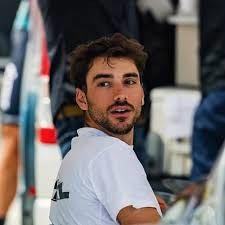
This message was reinforced through the lived experience shared by award-winning cyclist Alexandros Agrotis, who described cancer as a journey that compels individuals to rebuild their lives from the ground up. In his own experience, structure and stability were restored through care, with healthcare professionals serving as trusted guides and treatment becoming a pathway towards regaining control. He also highlighted the value of digital tools in helping patients better understand and engage with their care, not as a substitute for clinical support, but as an extension of it.
Whether viewed through the lens of policy or personal experience, the conclusion was the same: patients must be placed at the centre of the system, not at its margins.
This is where the ECHoS network of National Cancer Mission Hubs plays a particularly important role. ECHoS supports the implementation of Europe’s Beating Cancer Plan and the EU Mission on Cancer through the development of National Cancer Mission Hubs that bring together policymakers, researchers, healthcare professionals and patient organisations in pursuit of more equitable, innovative and people-centred cancer care across Europe.
National hubs help bridge the gap between policy ambition and practical implementation. They transform complex data ecosystems into meaningful tools for healthcare professionals and patients alike, while supporting the diffusion of digital innovation beyond centres of excellence and into everyday clinical practice.
2.The Second European Cancer Mission Fair of ECHoS
28 April, Nicosia
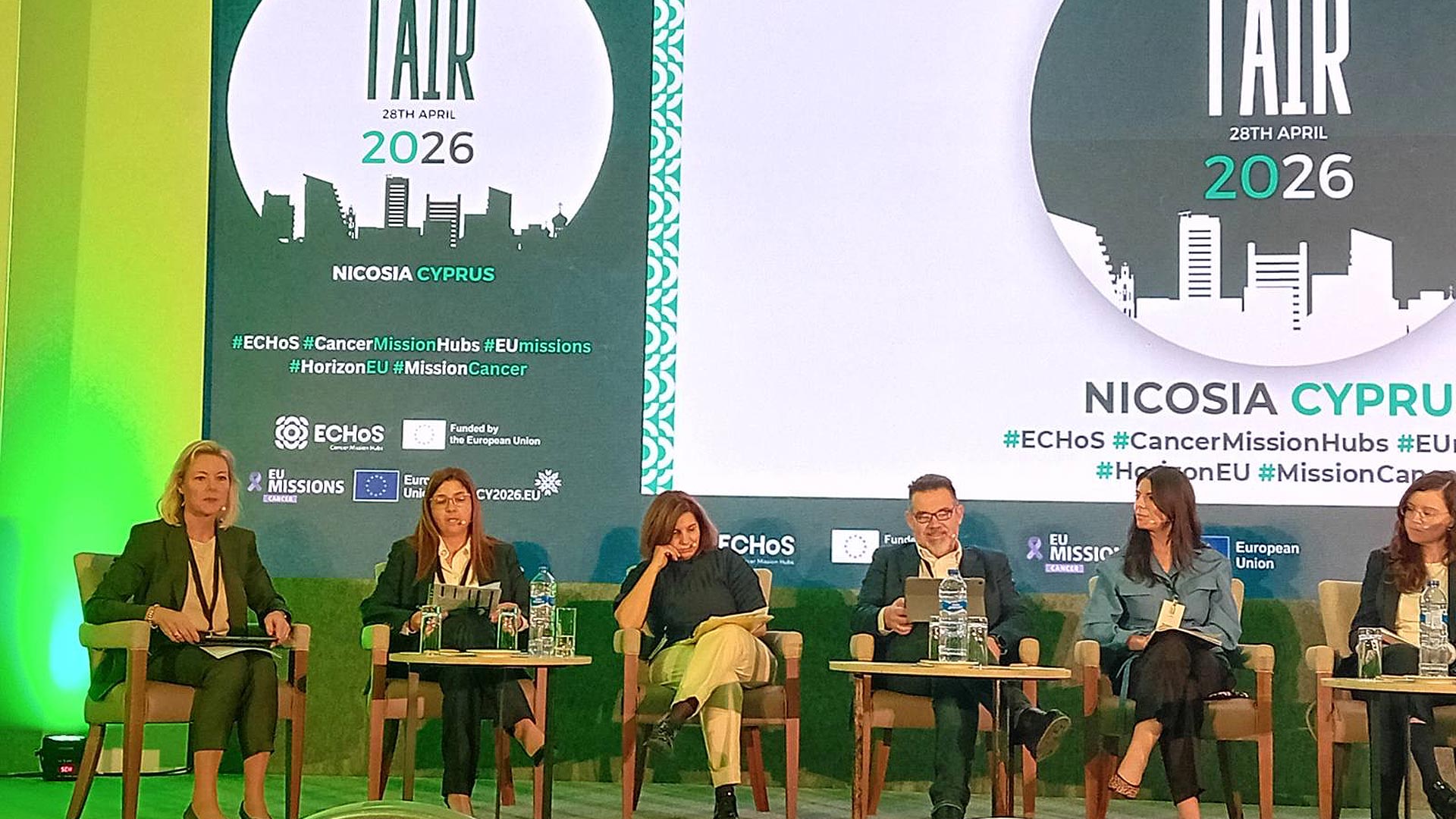
The second edition of the Cancer Mission Fair, under the theme Engage, Share, Connect, built on the momentum of last year’s success and brought together a broad European and national community.
Organised within the framework of the Establishing Cancer Mission Hubs: Networks and Synergies (ECHoS) project, in collaboration with the EU Mission on Cancer and under the auspices of the Cyprus Presidency of the Council of the European Union 2026, the Fair provided a unique platform for exchanging best practices, strengthening cross-sector collaboration and exploring interactive exhibitions and artistic initiatives.
The event focused on practical collaboration and citizen-centred innovation across cancer prevention, care and research.
ELLOK actively contributed to discussions with European and national stakeholders, highlighting patient priorities and the need to translate European policies into tangible outcomes for citizens.
3.Securing a Lasting Legacy for Europe’s Beating Cancer Plan and the EU Mission on Cancer
29 April, Nicosia
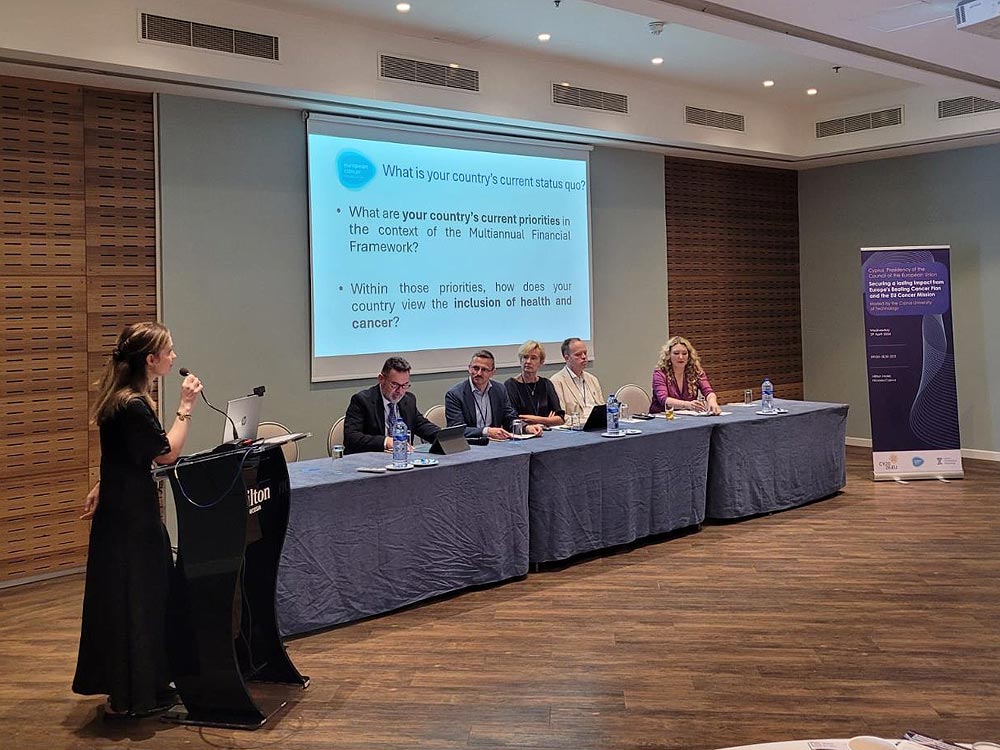
As negotiations begin on the next Multiannual Financial Framework for 2028-2034, the question of sustainability has become increasingly important. The progress achieved through Europe’s Beating Cancer Plan and the EU Mission on Cancer must now be preserved, strengthened and expanded.
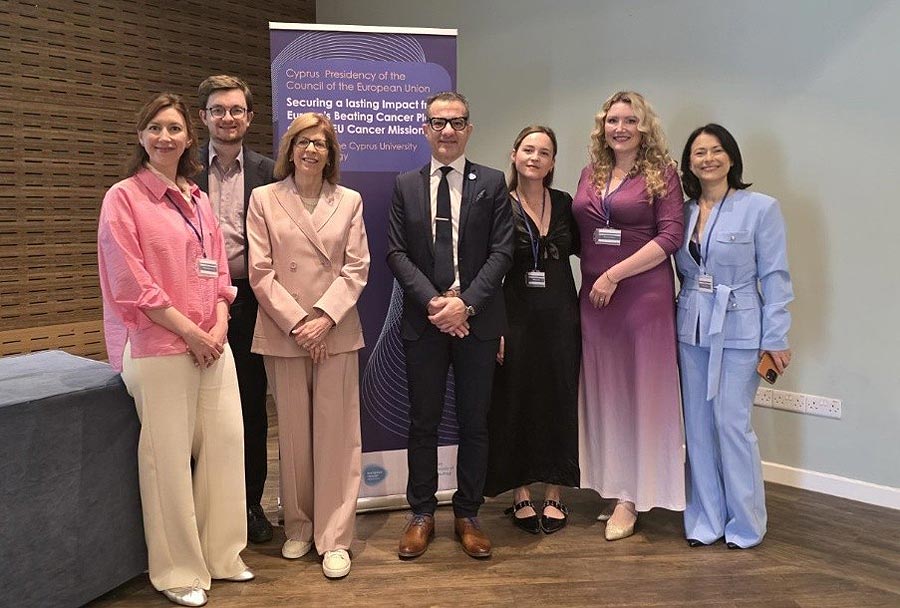
Hosted by the Cyprus University of Technology and the European Cancer Organisation under the auspices of the Cyprus Presidency of the Council of the European Union, the event brought together leading European voices to shape expectations for the next phase of European cancer policy.
In July 2025, Cypriot and European leaders, researchers and patient representatives adopted the Larnaca Declaration, calling for deeper cooperation in cancer control. This effort is now being further reinforced through the Cyprus Presidency, which has invited stakeholders to help define a clear vision for the future of cancer prevention and care in Europe.
4.Strengthening Comprehensive Cancer Care in Europe
29 April, Nicosia
The week concluded with a focused discussion on the strategic role and long-term sustainability of comprehensive cancer care systems across Europe.
Hosted at the Bank of Cyprus Oncology Centre, the event highlighted the need for integrated models of care that connect prevention, diagnosis, treatment and survivorship within a coherent framework. It also underscored the importance of sustainable structures capable of keeping pace with clinical innovation while ensuring continuity of care for patients.
Conclusions
Across all four events, ELLOK contributed actively to discussions shaping the future of European cancer policy.
A consistent message emerged throughout the week: Europe has made significant progress, but the next phase must focus on implementation, integration and sustainability.
For ELLOK, the priority remains ensuring that European ambitions translate into meaningful improvements for people affected by cancer in Greece and Cyprus. As the Hellenic Cancer Federation and Greece’s National Cancer Mission Hub, ELLOK will continue to serve as a bridge between European policy and national action, helping to ensure that innovation, research and collaboration deliver measurable benefits for patients, families and healthcare systems alike.